Light therapy vs microcurrent, microneedling and radiofrequency.
These four sit side by side in the same aisle and get compared as if they were versions of one another. They are not. Each acts on something different, asks a different level of commitment, and carries a different risk profile. Knowing which is which is the fastest way to stop buying the wrong device.
The short version
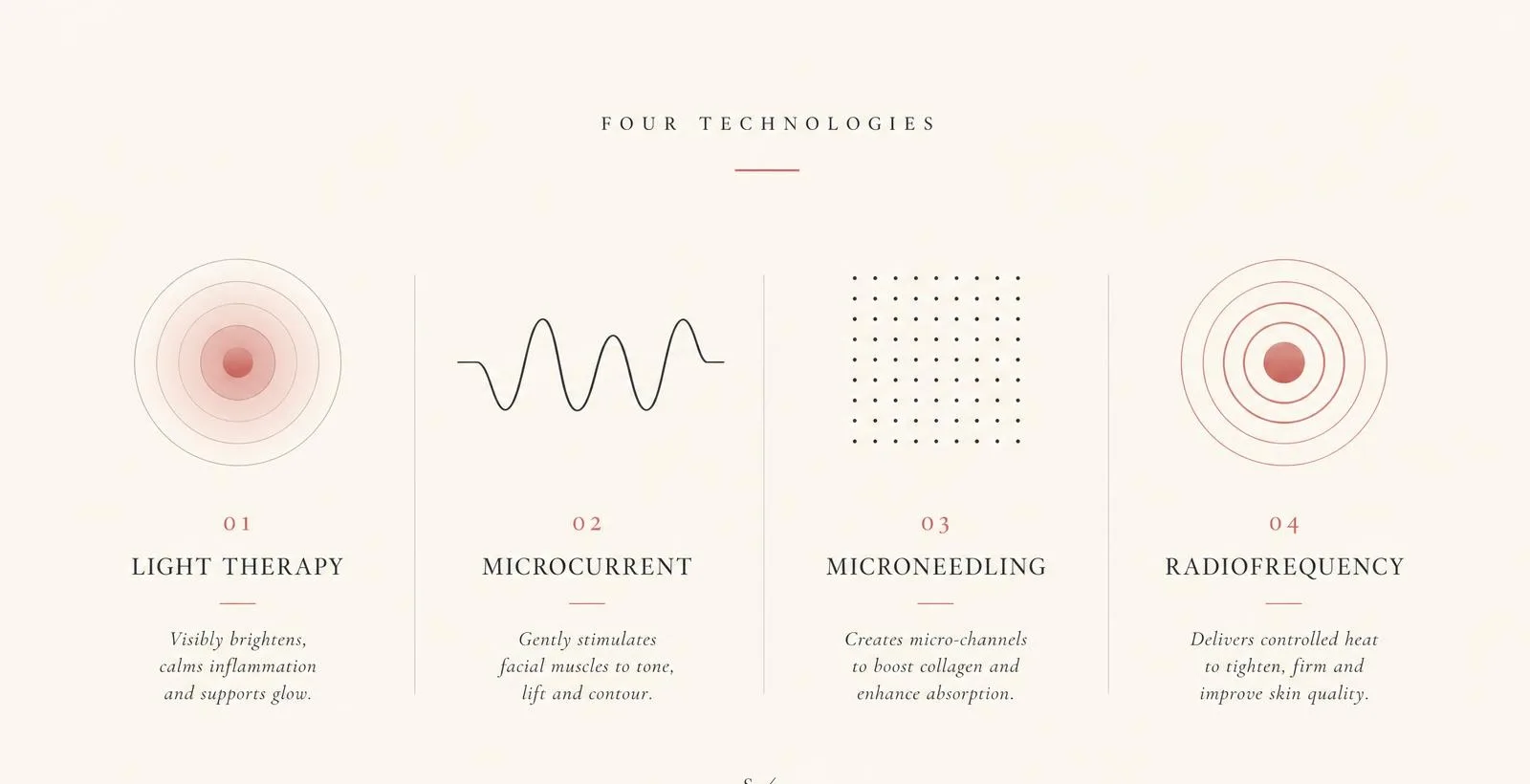
Light therapy adds energy without injury and rewards frequency. Microcurrent stimulates muscle and is a maintenance habit. Microneedling deliberately injures the skin so it repairs, so it is occasional and carries real aftercare. Radiofrequency heats the dermis and is the most technique-dependent of the four at home.
Sorted by what they act on
- Energy in, no damage. Red and near-infrared light. Nothing is broken, so there is nothing to recover from — which is why daily use is the norm.
- Muscle and tone. Microcurrent works on the facial muscles beneath the skin rather than the skin itself, and its effects fade without upkeep.
- Deliberate injury. Microneedling relies on the healing response. That is also why hygiene, needle depth and spacing between sessions matter more than the device price.
- Heat. Radiofrequency depends on reaching and holding a temperature range — too little does nothing, too much is a burn risk, and the difference is in your hand.

Side by side
| Category | What it acts on | How it feels | Commitment | Downtime |
|---|---|---|---|---|
| Red / NIR light therapy | Delivers light energy into skin and deeper tissue without heat or injury | Nothing, or mild warmth | Short and frequent — around 10 minutes, most days | None |
| Microcurrent | Low-level electrical current applied over facial muscles | Faint tingle; sometimes a metallic taste near the jaw | 5–20 minutes, frequent, with conductive gel | None |
| Microneedling | Controlled micro-injury to trigger the skin's repair response | Prickling to genuinely uncomfortable | Occasional — spaced weeks apart | Redness for a day or more; strict hygiene required |
| Radiofrequency | Radio-frequency energy heats the dermis | Distinct heat, moved continuously to avoid hot spots | Weekly-ish courses, then maintenance | Usually none, occasional temporary redness |
Choosing by honest self-assessment
The best predictor of results from any of these is adherence, so choose against your actual routine rather than your intended one. A hands-free 10-minute mask asks nothing of your attention. A gel-and-glide handheld asks for both hands and a mirror. A needling device asks for planning and aftercare. Pick the one you will still be doing in November.
Where the G11 sits
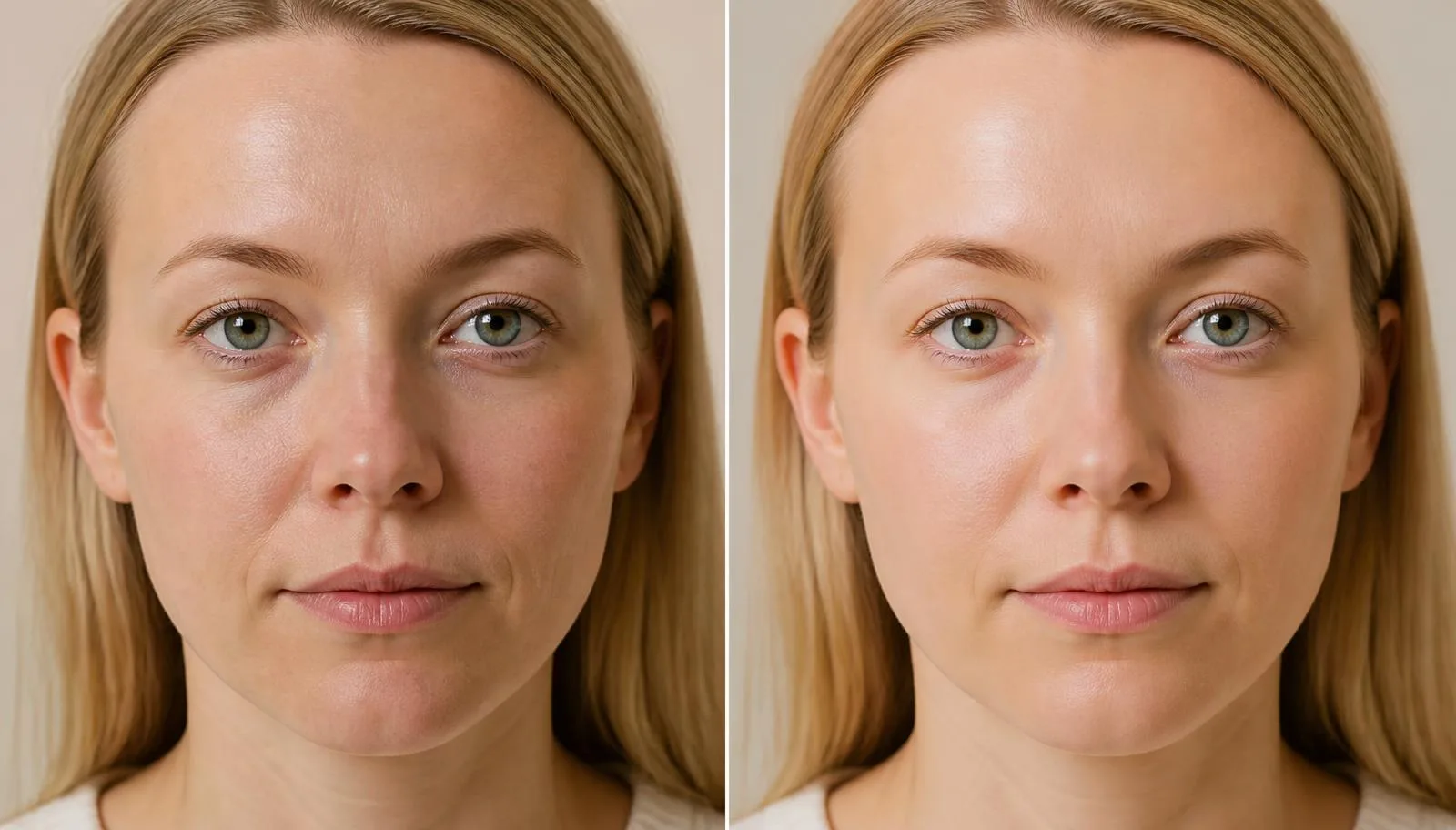
The Dermé G11 is squarely in the first category: light energy only, no heat protocol, no needles, no gel. Three wavelengths — 660, 850 and 1064 nm — from true VCSEL laser diodes at 48–60 mW/cm², in a hands-free session of about ten minutes.
Common questions
Which category should I start with?
If you want the lowest-friction, lowest-risk option to run daily, light therapy is the usual starting point: no consumables, no gel, no downtime, and nothing to do wrong beyond wearing eye protection and keeping the schedule.
Can I use a light mask and microcurrent together?
They act through unrelated mechanisms and are commonly used in the same routine — typically on cleansed skin, one after the other rather than at the same time. Follow each manufacturer's instructions and stop if skin becomes irritated.
Light therapy after microneedling?
Ask whoever performed it. Freshly needled skin is compromised and the sensible default is to wait until the barrier has settled before adding any device. Do not improvise a protocol from a product page.
Is one of these a replacement for the others?
No. They target different things: light energy, muscle stimulation, wound-healing response, and dermal heating. Pick by concern and by what you will realistically keep doing, not by which sounds strongest.
How long before any of them show anything?
Every one of these categories is cumulative and gradual. Judge on a consistent 8–12 week run with photographs in the same light, not on a single week.
Dermé devices are cosmetic and wellness products, not medical devices. Nothing here is medical advice or intended to diagnose, treat, cure, or prevent any disease. See our safety information.