At-home laser mask vs in-clinic light therapy.
A clinic session is stronger than anything you can safely run at home. That is true, and it is also not the whole comparison — because results from light therapy track cumulative dose, and cumulative dose is a function of how often you actually do it. Here is how the two stack up on intensity, frequency, supervision and cost.
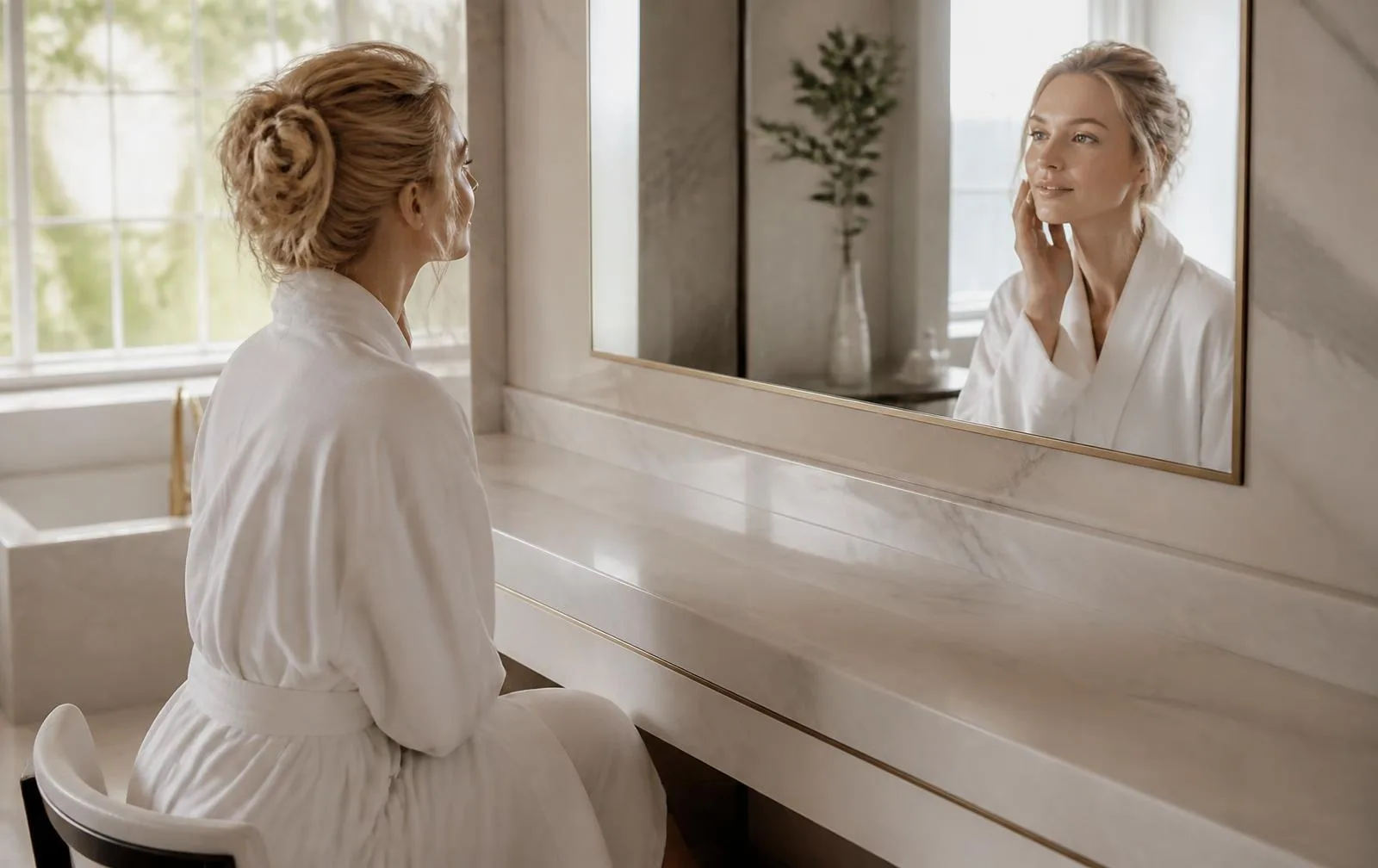
The short version
Clinics win on peak intensity, on treating specific diagnosed concerns, and on having a professional choose the settings. Home devices win on frequency, on cost per session, and on the one variable that predicts results better than any other: whether you keep going. Choose the clinic for a defined problem; choose a home device for maintenance and long-run consistency.
1. Intensity is not the outcome — dose is
Delivered energy is irradiance multiplied by time, in joules per cm². A single high-intensity clinic session delivers a large dose in one sitting. A home session delivers a smaller one, but you can repeat it tomorrow at no extra cost. Over twelve weeks, five short home sessions a week will usually add up to more total exposure than a weekly appointment — provided you keep the habit.
That "provided" is doing real work. Adherence, not hardware, is where most home devices fail. It is why session length matters: a 10-minute treatment survives a real evening; a 30-minute one gets skipped.
2. What only a clinic can do
Ablative and fractional lasers, prescription-strength protocols, and any treatment aimed at a diagnosed condition belong with a professional. So does anything requiring an intake assessment — medication interactions, photosensitivity, pigmentation history. No consumer mask substitutes for that, and a mask that claims to is telling you something about the seller rather than the device.
3. What only home use can do
Frequency, privacy, and zero marginal cost. There is no booking, no commute, and no decision to make each time — which is precisely what makes a daily habit stick. It also means maintenance is realistic: most clinic gains fade without ongoing exposure, and ongoing paid appointments are the part people quietly stop doing.

Side by side
| Consideration | At-home laser mask | In-clinic light therapy |
|---|---|---|
| Intensity per session | Moderate — designed for unsupervised, repeatable use | Higher — operated by a trained provider |
| Frequency | Daily or near-daily, on your own schedule | Typically weekly or a fixed course of visits |
| Cumulative dose over a year | High, because sessions are frequent and free after purchase | Lower unless you keep paying for repeat courses |
| Consistency | Depends entirely on your routine | Enforced by appointments, but stops when the course ends |
| Supervision | None — follow the manual and eye protection guidance | Trained operator, intake questions, device settings chosen for you |
| Scope | Cosmetic and wellness use | Can include medical-grade procedures a home device cannot do |
| Cost shape | One purchase, then no per-session cost | Per-session, recurring |
| Travel and time | About 10 minutes at home | Appointment, commute, and waiting time |
Doing the cost maths yourself
Take the device price, divide by the sessions you honestly expect in year one, and compare that number to a local clinic rate. The Dermé G11 is $699 CAD with a one-year manufacturer warranty and no consumables. If you run it four evenings a week, that is roughly 200 sessions in a year, so a few dollars each — and the figure keeps falling in year two. If you would run it four times total, a clinic course is the better spend.
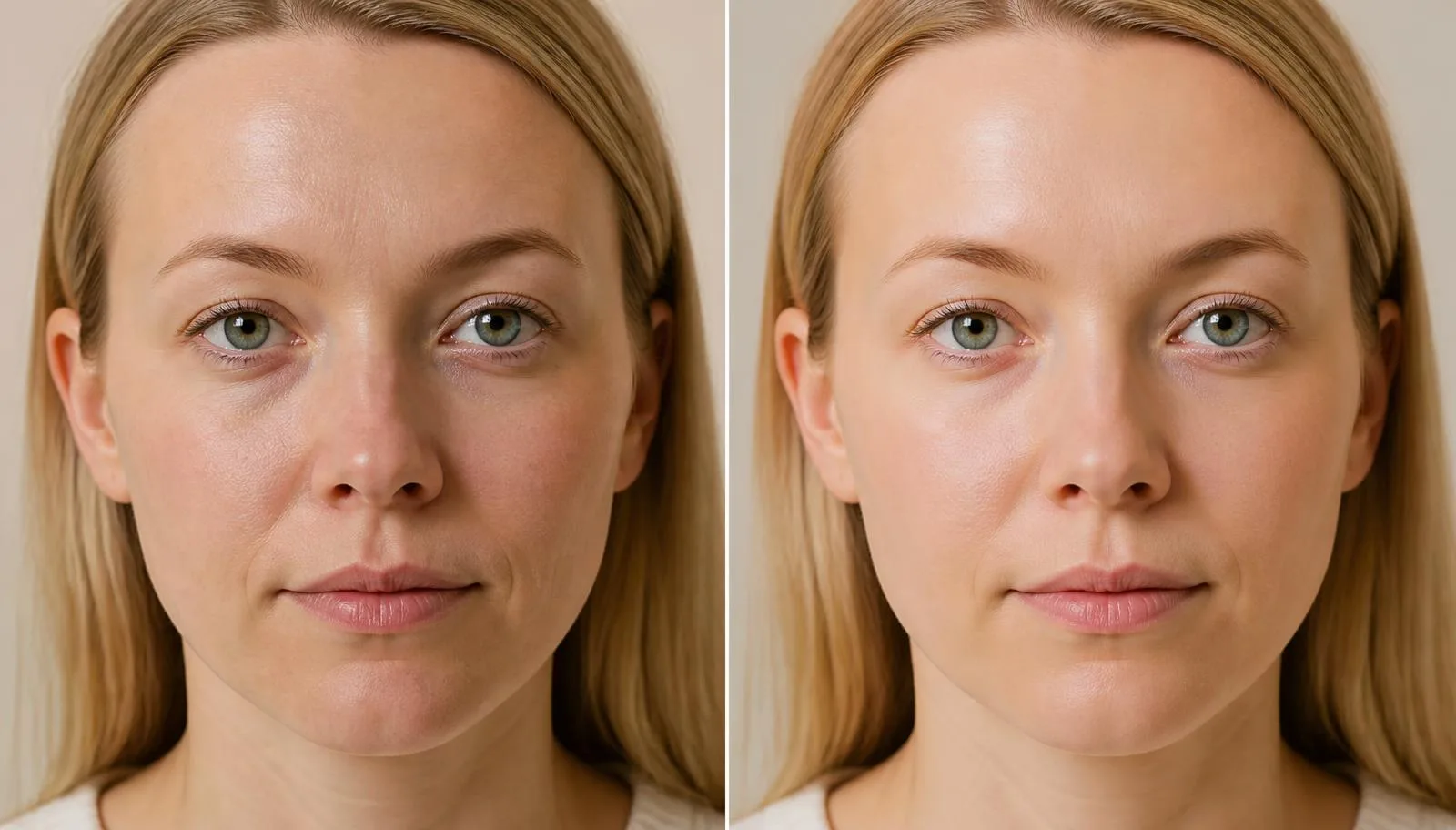
A reasonable way to combine them
- Diagnosed concern? Start with a professional assessment, not a purchase.
- Cosmetic tone, texture, firmness? A home device used consistently is the sensible first step.
- Finished a clinic course? Home sessions are the cheapest way to hold the ground you paid for.
- Either way, check wavelengths and published irradiance before you compare prices at all.
Common questions
Is an at-home mask as strong as a clinic device?
Per session, no. Clinic devices run at higher power under trained supervision. The trade is frequency: a home device you use most evenings accumulates far more total exposure over a year than a short course of appointments, and light therapy is a cumulative-dose modality.
Can I do both?
Many people do. A clinic course for a specific concern, with home sessions in between and afterwards to maintain, is a common pattern. Tell your provider which home device you use and follow any spacing they advise around procedures.
How do I compare cost fairly?
Divide the device price by the number of sessions you realistically expect in a year, then compare that per-session figure with a clinic's rate. Add nothing for consumables — light therapy has none. Be honest about your adherence: a device you use twice never pays back.
When should I choose the clinic instead?
If you have a diagnosed skin condition, are on photosensitising medication, are pregnant, have a history of skin cancer, or want a medical outcome rather than a cosmetic one, see a professional. The G11 is a cosmetic and wellness device and is not intended to diagnose, treat, cure, or prevent any disease.
Dermé devices are cosmetic and wellness products, not medical devices. Nothing here is medical advice or intended to diagnose, treat, cure, or prevent any disease. See our safety information.